
Two days after a perfect trial of the highly advanced Agni-IV weapon system, India on Friday successfully test-fired its nuclear-capable Agni-III missile with a strike range of over 3000 km from the Wheeler Island off the Odisha coast.

Boosting its air defence shield and re-validating operational efficacy, India on Thursday test fired successfully its indigenously-developed surface-to-air 'Akash' missile from the Integrated Test Range at Chandipur, nearly 15 km from Balasore. "The user-specific trial, which formed part of the country's routine air defence exercises, was successful," said a Defence Research Development Organisation official associated with the Akash missile project.
A mock air defence exercise relating to India's indigenously developed interceptor missile is carried out from Wheeler's island off the Orissa coast today.
This variant of the missile takes just 300 seconds to reach a target located at a distance of 150km.

President Droupadi Murmu and Prime Minister Narendra Modi on Saturday led the nation in paying tributes to military personnel who fought valiantly in harsh conditions to hand Pakistan a crushing defeat in the 1999 Kargil conflict.

Dr Sonali Ghosh, the first woman to head the Kaziranga National Park and the first Indian to win the IUCN's Kenton Miller Award, has turned her childhood love for nature into an inspiring career in wildlife protection and leadership.
India on Saturday successfully test-fired indigenously developed ballistic missiles 'Prithvi-II' and 'Dhanush' from different locations off the Orissa coast, adding more firepower to the armed forces.
'Akash' is part of Indian's Integrated Guided Missile Development Programme.
The anti-aircraft missile, capable of ducking radar eyes and attacking enemy targets up to 110 km, was test fired from launch pad number 2 of the ITR complex at about 11.47 am, defence sources said. The test was conducted after an analysis of the data generated from yesterday's flight trial in order to further validate all major parameters, they said.
Astra is an indigenously developed air-to-air missile.

India successfully test-fired its indigenously built nuclear capable Agni-I missile, which has a strike range of 700 kilometre on Thursday, from a test range off Odisha coast as part of a user trial by the army.
The missile was launched from a mobile launcher at the Integrated Test Range at the Wheelers' Island, a defence base in the Bay of Bengal on Orissa coast near in Balasore, Orissa, at 1015 hours. This was the second user trial of the precision target hitting missile to test its 'operational readiness', the scientists said. The last trial was conducted on October 5, 2007, from the same launch site.
Two days after a successful trial, the advanced version of pilotless target aircraft Lakshya-II was again successfully flight-tested at the Integrated Test Range (ITR) near Balasore in Odisha on friday.
India on Thursday test-fired its indigenously designed and developed Advanced Air Defence missile, capable of destroying any hostile ballistic missiles at low altitude, from the Integrated Test Range off Orissa's east coast.
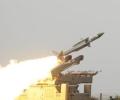
India today successfully test fired indigenously-developed surface-to-air Akash missile with a strike range of 25 km and capability to carry warhead of 60 kg from the Integrated Test Range at Chandipur as part of a user-trial.

India on Thursday successfully test-fired its indigenously developed nuclear capable Prithvi-II surface-to-surface missile with a strike range of 350 km as part of a user trial by the army from a test range at Chandipur in Odisha.
Lakshya is the indigenously developed Pilotless Target Aircraft.

The Indian Army's broader reorganisation is inevitable as India's military doctrine adapts to the demands of the modern battlefield.

India on Friday successfully test-fired its indigenously developed nuclear-capable Agni-I ballistic missile with a strike range of 700 km from a test range off Odisha coast as part of a user trial by the army.

"It was a direct hit and grand success," defence sources said after the test launch.

India successfully test-fired its indigenously developed nuclear capable sub-sonic cruise missile 'Nirbhay', which can strike targets more than 700 kms away, from a test range at Chandipur near Balasore in Odisha on Friday.

Prithvi-II is capable of carrying 500-1,000 kilogram of warheads and is thrusted by liquid propulsion twin engines.
With a range of 25km, Akash is one of the five missiles currently under development by the Defence Research and Development Organisation.
After achieving the precision guidance capability from a fixed launcher in its fourth trial on October 29 last, the missile was on Sunday test-fired from a mobile launcher.
Two indigenously developed surface-to surface missiles were planned to be fired from a mobile launcher in salvo mode from the launch complex-3 of ITR as part of user trial by the Army, defence sources said.
Agni-I missile is equipped with sophisticated navigation system which ensures it reaches the target with a high degree of accuracy and precision.
It was the missile's third test flight. The first was on April 11, 1999 and second on January 17, 2001.

The state-of-the-art indigenous missile targeting an UAV 'Banshee', was fired from the launch complex-III of the Integrated Test Range at Chandipur near Balasore on Tuesday afternoon.

The vehicle can be used as an aerial target for evaluation of various missile systems.
The surface-to-surface missile, powered by solid propellants, was test-fired from a mobile launcher at 10.10 am from launch pad-4 of the Integrated Test Range at Abdul Kalam Island (Wheeler Island), defence officials said.

Inducted into Indian armed forces in 2003, the nine-metre-tall, single-stage liquid-fueled Prithvi II is the first missile to be developed by DRDO under India's prestigious Integrated Guided Missile Development Program.
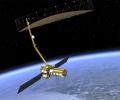
NISAR will not be used for surveillance and will be used to observe the earth.
Weighing about 700 kilogrammes, the sophisticated missile uses an integral ramjet rocket propulsion system and has a low reaction time.

'ISRO recommended to carry out in-situ repairs or replacement and conduct a low-temperature leak test to validate system performance and integrity, before proceeding with launch.'
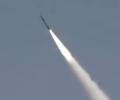
Pakistan successfully conducted a training launch of the 'Fatah series' surface-to-surface missile with a range of 120 kilometers. The launch comes amid heightened tensions with India following a terror attack in Jammu and Kashmir. The Inter-Services Public Relations (ISPR) said the test was part of the ongoing exercise 'INDUS' and was aimed at ensuring the operational readiness of troops and validating key technical parameters, including the missile's advanced navigation system and enhanced accuracy.

Frankly, I never expected to be offroading in an electric vehicle, let alone an SUV of this calibre, raves Rajesh Karkera/Rediff after a test drive.
